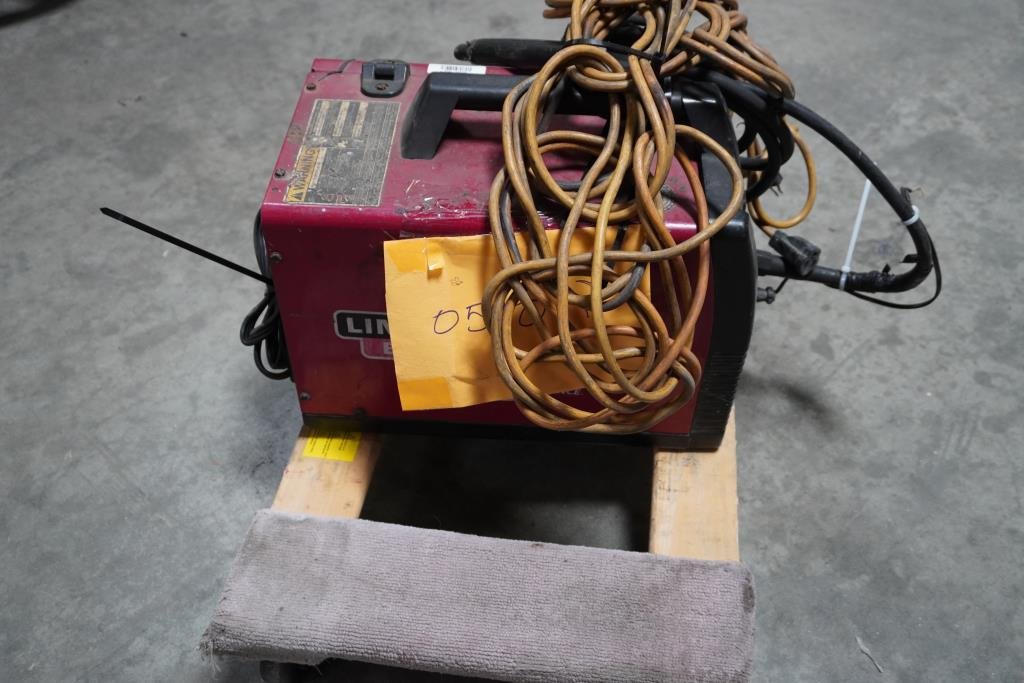
In the wild expanse where power lines fear to tread, and the hum of a workshop is a distant memory, skilled hands still need to join steel, cut metal, and power essential tools. This is the domain of the off-grid warrior, the remote repair specialist, the pipeline pioneer. And for these tough jobs, the Applications of Lincoln Welder Generators are not just versatile – they’re indispensable. They are the portable heartbeats that keep critical work moving forward, miles from the nearest outlet.
Imagine a downed fence line deep in a ranch, a critical structural repair on a remote construction site, or a vital connection on a new pipeline snaking across barren land. Without a reliable, self-contained power source that can both weld and run auxiliary equipment, these tasks grind to a halt. Lincoln Electric, a name synonymous with welding innovation and reliability, has engineered a line of engine-driven welder generators that are specifically designed for these demanding, off-grid scenarios. These machines aren't just welders with a generator tacked on; they're integrated powerhouses built to perform in the most challenging environments.
At a Glance: Why Lincoln Welder Generators Are Off-Grid Game Changers
- Ultimate Portability: Engine-driven, they go wherever the work is, free from grid constraints.
- Multi-Functionality: Weld, generate auxiliary power, sometimes even compress air or jump-start batteries from a single unit.
- Robust Performance: Built to handle demanding welding processes (Stick, TIG, MIG, Gouging) in harsh conditions.
- Reliable Auxiliary Power: Deliver stable electricity for power tools, lights, and other job site essentials.
- Specialized Solutions: Models tailored for specific tasks, from multi-process versatility to dedicated pipeline work.
- Cost-Effective Fieldwork: While a higher upfront investment than plug-in welders, their versatility drastically reduces operational complexities and downtime in remote locations.
The Powerhouse Problem Solver: Your Mobile Workshop
At its core, an engine-driven welder generator is a portable, multi-function piece of equipment designed to bring the capabilities of a full-fledged welding shop to any location, regardless of access to utility power. Think of it as your mobile command center for fabrication, repair, and construction, equipped with everything needed to tackle unforgiving tasks.
These machines combine a robust internal combustion engine (gasoline or diesel) with a sophisticated generator and welding power source. This seamless integration means you're not just getting raw power; you're getting "clean" power specifically tuned for smooth, consistent welding arcs, alongside ample auxiliary output for everything from grinders and drills to floodlights and battery chargers. It's about empowering field operations, transforming remote sites into productive work zones.
Why Lincoln Electric? A Legacy of Off-Grid Reliability
Lincoln Electric didn't just stumble into the engine-driven welder market; they've been defining it for decades. Their commitment to innovation, durability, and user-focused design has made their welder generators a go-to choice for contractors, pipeline crews, farmers, and mobile repair technicians worldwide. When you choose a Lincoln machine, you’re investing in a legacy of rugged engineering, advanced welding technology, and the peace of mind that comes from knowing your equipment will perform when it matters most.
From patented Chopper Technology® for superior arc control to CrossLinc® for remote parameter adjustments, Lincoln consistently integrates features that enhance productivity, quality, and safety in challenging environments. This is why their models aren't just good for off-grid work; they're often the benchmark for it.
Lincoln's Workhorses: Models for Every Off-Grid Challenge
Lincoln Electric offers a diverse lineup of engine-driven welder generators, each engineered with specific applications and user needs in mind. Understanding their unique capabilities is key to selecting the right tool for your toughest jobs. When you're ready to dive deeper, you can Explore Lincoln welder generators to find the perfect fit.
1. The Multi-Function Maestro: Ranger® Air Multi-Function (Kohler®)
This model is the ultimate Swiss Army knife for the job site. It integrates five critical functions into a single, portable unit:
- Air Compressor: Essential for plasma cutting, pneumatic tools, and running air-powered equipment.
- Generator: Provides auxiliary power for lights, grinders, and other electrical tools.
- Battery Jump Assist: A lifesaver for dead vehicles or heavy equipment in remote locations.
- Battery Charge: Keeps essential batteries topped up.
- Multi-Process Welder: Capable of Stick, TIG, MIG, and Gouging, offering comprehensive welding flexibility.
The Ranger Air is ideal for general contractors, maintenance crews, and anyone who needs a broad spectrum of utility from a single, compact machine. Imagine a roadside repair where you need to weld a broken bracket, air up a tire, and jump-start a truck – all with one unit. That's the Ranger Air's domain.
2. The Versatile Performer: Ranger® Engine Driven Welders/Generators (Kohler®)
The Ranger series is Lincoln's flagship line for broad multi-process welding applications. These machines are built for serious duty, offering:
- Comprehensive Welding Capabilities: Equipped for Stick, TIG, MIG, and Gouging, making them suitable for a vast array of materials and joint types.
- Robust Auxiliary Power: Sufficient output for most standard power tools and lighting requirements.
Perfect for general fabrication, repair, and construction, the Ranger models are known for their reliability and consistent arc performance. They are the go-to for many contractors who need a dependable, all-around welding solution that can power itself and other tools on site.
3. The Advanced Powerhouse: Maverick® (Kubota®)
The Maverick steps up the game with advanced DC multi-purpose welding capabilities and enhanced technology:
- High-Speed Operation: Designed for efficiency and responsiveness.
- Advanced DC Multi-Purpose Welding: Delivers superior arc characteristics for critical welds.
- 120/240 VAC Single-Phase Auxiliary Power: Ample power for various job site needs.
- User Interface Screen: Provides intuitive control and feedback.
- Patented CrossLinc® and Chopper Technology®: These innovations mean better arc stability, remote control from the arc, and consistent weld quality, even with long cable runs.
The Maverick is engineered for professionals who demand precision, control, and cutting-edge features in their off-grid welding operations. It shines in applications where weld quality and operator convenience are paramount.
4. The Innovative Edge: Frontier® (Kubota®)
While details are often application-specific, the Frontier series is described as a versatile, next-generation system designed for jobsite innovation. This suggests a focus on combining robust performance with smart features that streamline work processes and enhance productivity. Look to the Frontier for forward-thinking solutions that adapt to evolving job site demands.
5. The Heavy Hitter: Vantage® 322 Diesel (Kubota®)
When the job calls for serious power and durability, the Vantage series steps in. The Vantage 322 Diesel offers:
- High Amperage Welding: Up to 400A of DC multi-process welding, capable of handling heavy fabrication and gouging tasks.
- Versatile Auxiliary Power: Provides 120/240 VAC single-phase and 240 VAC three-phase, crucial for running larger, more demanding equipment like three-phase motors or specific industrial tools.
- Robust Diesel Engine: Powered by a 22 hp Kubota® V1505 diesel engine, known for its longevity, fuel efficiency, and reliability in harsh environments.
- Chopper Technology®: Ensures premium arc performance across all welding processes.
The Vantage 322 Diesel is a workhorse for structural steel, heavy equipment repair, and industrial construction where sustained high-amp welding and significant auxiliary power are non-negotiable.
6. The Pipeline Specialist: Cross Country® 300 (Kubota®)
Purpose-built for the rigors of pipeline welding, the Cross Country 300 is a highly specialized machine:
- Dedicated Pipeline Performance: Optimized for the demanding root, hot, fill, and cap passes of pipeline construction. You can find dedicated pipeline welding solutions like this that truly excel in specialized areas.
- DC Multi-Purpose Welding: Delivers the precise arc characteristics required for critical pipe welds.
- Auxiliary Power: Offers 120/240 VAC single-phase and 240 VAC three-phase.
- Dual Output Control: Allows for fine-tuning of welding parameters.
- Compact, Lightweight Design: Specifically engineered to fit easily into truck beds, a critical factor for mobile pipeline crews who navigate challenging terrain.
For crews laying miles of pipe, the Cross Country 300 offers the perfect blend of specialized welding performance, portability, and robust auxiliary power.
Beyond Lincoln: A Look at the Broader Landscape of Engine-Driven Welders
While Lincoln Electric stands at the forefront, other manufacturers also offer strong contenders in the engine-driven welder generator space. Understanding these can provide context for Lincoln's position as a leader in versatile multi-process engine welders.
- Lincoln Electric Eagle 10.000 Plus: A gasoline-powered unit delivering substantial continuous (9000W) and surge (10,500W) power. At 514 lbs, its 23 HP Kohler engine and 12-gallon fuel tank provide extended operation (1.5 gal/hr at 210A DC). Primarily a Stick machine, its high generator power means you can even plug in other welders.
- Hobart Champion 145: Lighter and more compact (222 lbs) with included running gear, offering 4,000W continuous and 4,500W surge power. Its 10 HP Briggs & Stratton engine and 6.25-gallon fuel tank make it highly portable.
- Klutch 7500K: A budget-friendly option (220 lbs with cart), providing 6,000W continuous and 6,600W surge power from a 14 HP Kohler engine. It offers up to 8 hours of run time.
- Miller Fusion 160: A compact (242 lbs) unit with 6200W continuous power. Its 13.4 HP Kohler engine and Power Shift technology allow the 160-amp inverter stick welder to run off either the generator or utility power, highlighting its adaptability.
- ESAB Ruffian 150 DC: A lightweight (236 lbs) DC Stick welder and AC generator combo. A key feature is its auxiliary generator output voltage being independent of the welding current, ensuring smooth arc performance even when other tools are drawing power.
- TOMAHAWK 15 HP: The lightest at 202 lbs, it offers the lowest generator output (2000W continuous) but a high welding output (210 amps) for Stick and TIG. Designed for extreme portability and day-long operation.
This diverse market underscores the critical need for portable welder generators for remote sites, with manufacturers constantly innovating to meet varied demands.
Engine-Driven vs. Plug-in Welders: Choosing Your Field Commander
Deciding between an engine-driven welder generator and a traditional plug-in welder is one of the first strategic choices you'll make for your operations. It boils down to where and how you work.
- Versatility: This is where engine-driven welders truly shine. They are mobile power plants, capable of welding, cutting, grinding, lighting, and powering a host of other tools—all without a utility connection. If your work involves more than 70% fieldwork, repairs in remote locations, or dynamic job sites, an engine-driven unit is almost certainly your best bet. Plug-in welders, by contrast, are tethered to a stable power source, limiting their use to shops, garages, or job sites with readily available and appropriate electrical hookups.
- Welding Power & Duty Cycle: Plug-in welders typically boast higher amperage outputs (often 500+ amps) and can sustain a 100% duty cycle (continuous welding) due to their stable, virtually unlimited power supply. Engine-driven welders generally offer lower maximum amperage (rarely exceeding 400 amps, with many around 225-300 amps) and duty cycles up to 60%. For heavy, continuous production welding in a shop, plug-ins usually dominate. For field repairs and fabrication, the engine-driven capacity is usually more than sufficient.
- Welding Performance: Historically, plug-in welders offered more consistent and stable arc performance. However, modern engine-driven machines, especially those from Lincoln with Chopper Technology® or models like the ESAB Ruffian with independent auxiliary power output, have significantly closed this gap. They deliver remarkably consistent arc characteristics, even when simultaneously powering other tools, ensuring high-quality welds in the field.
- Costs: Engine-driven welder generators represent a higher initial investment compared to their plug-in counterparts. However, their unparalleled versatility, ability to operate independently, and the potential to combine multiple functions (welder, generator, air compressor, jump starter) can lead to substantial cost savings in terms of logistics, equipment rental, and operational efficiency for contractors and mobile businesses. For stationary, shop-based work, plug-in welders are generally more economical.
Decision Criteria for Engine-Driven: - Regularly work away from main power sources.
- Need to power tools alongside welding equipment.
- Prioritize mobility and independence.
- Undertake emergency repairs or fieldwork.
- Operate a mobile welding or repair business.
Welder-Generator Combo vs. Regular Generator: The Clean Power Advantage
Another critical distinction is between a purpose-built welder-generator combo and simply running a separate welder off a standard portable generator.
- Welder-Generator Combos: These integrated units are designed from the ground up to provide both welding output and auxiliary power. Crucially, they deliver "clean" power—meaning stable voltage and frequency—which is absolutely vital for a smooth, consistent welding arc. The internal components are harmonized to manage power demands efficiently, even if it means the overall auxiliary power rating might be slightly lower as a portion is reserved for welding. This integration ensures optimal welding performance without compromises.
- Regular Generators: While a powerful standalone generator can certainly power a plug-in welder, the quality of the generated electricity can be an issue. Standard generators often produce "dirty" power with voltage fluctuations or inconsistent frequency, which can lead to erratic arcs, poor weld quality, and even damage to sensitive inverter welders. While some high-end inverter generators offer cleaner power, they are often less robust and designed for different applications than a construction-grade welder generator. Moreover, you still need to transport and manage two separate machines.
For any serious welding application in the field, a dedicated welder-generator combo like those offered by Lincoln Electric is overwhelmingly the superior choice, ensuring both reliable power for your tools and pristine power for your arc.
Real-World Applications: Where Lincoln Welder Generators Shine
The sheer adaptability of Lincoln welder generators makes them indispensable across a vast spectrum of industries and scenarios.
- Construction Sites: From welding structural steel beams and rebar cages to fabricating custom brackets and performing on-site repairs of heavy equipment, these machines are foundational. They power the welding operation and simultaneously provide electricity for grinders, drills, saws, and floodlights, keeping projects on schedule even in undeveloped areas.
- Pipeline Welding: As highlighted by models like the Cross Country® 300, Lincoln welder generators are purpose-built for the challenging demands of pipeline construction and maintenance. They provide the precise arc control needed for critical root passes and robust power for high-production fill and cap welds, often across vast distances and rugged terrain.
- Farm & Ranch Repairs: A farmer’s ability to quickly repair broken gates, machinery, or structural elements without waiting for a mobile welding service is priceless. Lincoln welder generators are perfect for these rapid, often critical, fixes, keeping agricultural operations running smoothly.
- Emergency & Roadside Repairs: When a truck breaks down with a cracked frame, or a piece of heavy machinery needs an urgent repair in a remote location, a mobile welding service equipped with a Lincoln welder generator can be on site quickly to perform vital repairs, minimizing downtime and costly towing.
- Remote Maintenance (Mining, Forestry, Oil & Gas Fields): In industries operating far from infrastructure, equipment failures can be catastrophic. Lincoln units enable on-site welding and repairs for bulldozers, excavators, logging equipment, and oil rig components, often saving days or weeks of transport and repair time.
- Mobile Welding Businesses: For entrepreneurs running their own mobile welding or fabrication service, a Lincoln welder generator is the core of their operation. It allows them to take their shop directly to the customer, offering unparalleled convenience and capability.
- Disaster Relief & Response: In the aftermath of natural disasters, when utility grids are down, these powerful units are critical for cutting and welding damaged structures, repairing infrastructure, and providing essential power for emergency services.
Maximizing Your Investment: Best Practices for Lincoln Welder Generator Use
To ensure your Lincoln welder generator continues to perform flawlessly and provides maximum return on your investment, follow these best practices.
- Regular Maintenance is Non-Negotiable: Just like any engine, consistent maintenance is key.
- Oil Changes: Follow the manufacturer's recommendations. For example, the Eagle 10.000 Plus requires oil changes every 100 hours. Some modern engines, like those using specific synthetic oils (e.g., Kohler PRO 10W-50 synthetic in the Miller Fusion 160), can extend intervals significantly (from 100 to 300 hours), but always check your specific model's manual.
- Filter Changes: Air filters, fuel filters, and oil filters need regular inspection and replacement (e.g., every 200 hours for air filters on the Eagle 10.000 Plus).
- Spark Plugs & Hoses: Inspect and replace as needed.
- Fuel Management: Always use the correct fuel type (gasoline or diesel) and ensure it's fresh and clean. Stale or contaminated fuel can lead to engine problems. Keep tanks full to prevent condensation, especially in changing temperatures.
- Safety First: Always operate your welder generator in a well-ventilated area to prevent carbon monoxide buildup. Use appropriate personal protective equipment (PPE) for welding. Ensure proper grounding. Keep flammable materials clear of the exhaust.
- Match the Machine to the Job: Don't try to force a light-duty machine into heavy industrial work, or conversely, haul an oversized unit for small repairs. Choose a model like the Cross Country 300 for pipeline work or a Ranger Air for multi-utility general tasks. Understanding the duty cycle and amperage limitations is crucial to prevent premature wear and achieve quality results.
- Proper Storage: When not in use, store your unit in a dry, secure location. Consider fuel stabilizers if storing for extended periods, and disconnect the battery to prevent drain.
Frequently Asked Questions (FAQs)
What kind of welding processes can a Lincoln welder generator do?
Most Lincoln welder generators are multi-process, capable of Stick (SMAW), TIG (GTAW), MIG (GMAW), and Flux-Cored (FCAW) welding. Many higher-end models also support Arc Gouging. Always check the specific model's specifications, but Lincoln aims for broad versatility in its Ranger, Maverick, Vantage, and Cross Country lines.
How much auxiliary power do Lincoln welder generators provide?
Auxiliary power output varies significantly by model. Smaller gasoline units like the Eagle 10.000 Plus might offer 9,000 to 10,500 Watts, while heavier diesel units like the Vantage 322 Diesel provide up to 12 kW of auxiliary power, including both single-phase (120/240 VAC) and three-phase (240 VAC) options for industrial equipment. Check the specs for the exact wattage and voltage outputs.
Are diesel or gasoline models better for off-grid applications?
Both have their advantages.
- Diesel: Generally offers better fuel efficiency, higher torque, longer engine life, and often higher auxiliary power output, making them ideal for heavy, prolonged industrial use and very cold environments. They tend to have a higher upfront cost.
- Gasoline: Usually lighter, more compact, less expensive initially, and easier to start in extremely cold weather. They are excellent for general contracting, farm work, and applications where portability and lower cost are key.
The "better" choice depends on your specific budget, operational duration, power needs, and the environments you'll be working in.
How can I extend the run time of my Lincoln welder generator?
Several factors influence run time:
- Fuel Tank Capacity: Larger tanks (e.g., 12 gallons on the Eagle 10.000 Plus) mean longer run times.
- Load Management: Running the generator at lower loads (e.g., 3,000W instead of max output) or at idle speed (if available) will significantly extend operation.
- Engine Efficiency: Diesel engines are generally more fuel-efficient than gasoline engines.
- Eco-Throttle/Auto-Idle: Many modern units feature systems that automatically reduce engine speed when no load is detected, saving fuel.
Your Next Move: Equipping for Off-Grid Success
The demands of off-grid work are uncompromising, requiring tools that are as robust and reliable as the professionals who wield them. Lincoln Welder Generators stand as a testament to this need, offering a diverse array of models engineered to tackle every conceivable challenge—from intricate pipeline welds in desolate landscapes to emergency repairs on remote construction sites.
By understanding the distinct capabilities of each Lincoln model, the critical differences between engine-driven and plug-in welders, and the undeniable advantage of a dedicated welder-generator combo, you're now equipped with the knowledge to make an informed decision. Investing in the right Lincoln machine isn't just buying equipment; it's investing in productivity, reliability, and the unwavering confidence to power through the toughest jobs, wherever they may be. Choose wisely, maintain diligently, and let your Lincoln welder generator be the backbone of your off-grid success.