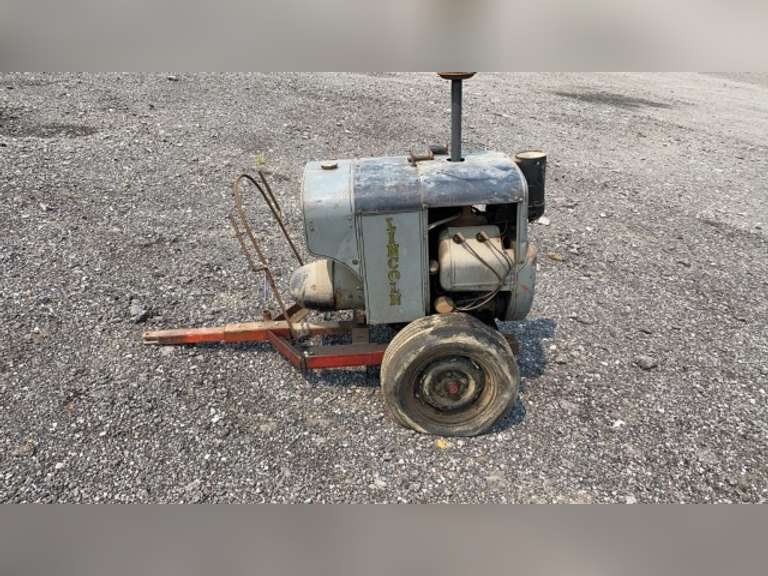
You've invested in a Lincoln Welder Generator—a powerful, versatile workhorse that combines the robust welding capabilities Lincoln is known for with the reliable power generation you need on any job site. But to truly unlock its potential, you need the right Lincoln Welder Generator Accessories. These aren't just add-ons; they're the vital links, safety nets, and performance enhancers that ensure your machine operates at peak efficiency, safely, and tailored to your specific demands.
Whether you're repairing heavy equipment in the field, fabricating structures on a remote construction site, or tackling a complex project far from grid power, the right accessories make all the difference between a frustrating struggle and a job well done.
At a Glance: Key Takeaways for Lincoln Welder Generator Accessories
- Beyond the Basics: Accessories extend the functionality, safety, and lifespan of your welder generator, often tailored to specific tasks.
- Compatibility is Crucial: Always match accessories to your specific Lincoln model's code and serial number to ensure proper fit and performance.
- Safety First: Prioritize high-quality personal protective equipment (PPE) and electrical safety accessories.
- Power Management: Understand your generator's output and select power distribution accessories that can handle the load.
- Maintenance Matters: Stocking common replacement parts ensures minimal downtime.
- Invest Wisely: Cheap, incompatible accessories can be dangerous, reduce weld quality, and damage your primary machine.
Why Your Accessories Are More Than Just "Extras"
Think of your Lincoln Welder Generator as the engine of a high-performance vehicle. The accessories? They're everything from the right tires for the terrain to the specialized tools that fine-tune its operation. Neglecting them is like trying to race on bald tires – you might get moving, but you won't perform optimally, and you're risking a breakdown.
For an engine-driven welder, accessories directly impact:
- Safety: The right ground clamp prevents electrical hazards; quality cables reduce overheating risks.
- Performance & Quality: Correct cable gauge ensures stable arc; appropriate electrode holders handle varied rod types.
- Efficiency: Longer leads mean less machine repositioning; remote controls save countless trips back to the unit.
- Durability: Protective covers shield your investment from harsh environments; genuine repair parts maintain longevity.
- Versatility: Adding a spool gun or wire feeder can transform a stick welder into a multi-process machine.
Getting this right starts with understanding the core machine. If you're looking for a deeper dive into the machines themselves, our Lincoln Welder Generator Hub offers comprehensive insights into choosing and operating these powerful units.
Navigating the Accessory Landscape: Essential Categories
The world of Lincoln Welder Generator Accessories can seem vast. To make sense of it, let's break down the most common and crucial categories you'll encounter.
1. Welding Leads & Cables: Your Arc's Lifelines
These are arguably the most fundamental accessories. Your welding leads – comprising the electrode holder cable and the work (ground) cable – transmit the electrical current from your welder generator to your workpiece.
What to Look For:
- Gauge (Wire Size): This is paramount. The longer the cable run and the higher the amperage, the thicker (lower gauge number) your cables need to be to prevent voltage drop and overheating. A common mistake is using cables too thin, leading to weak arcs, poor welds, and potential fire hazards.
- Quick Tip: Consult your Lincoln manual or an online cable size chart based on amperage and length.
- Length: Longer leads offer more reach, reducing the need to move your heavy welder generator. However, remember the gauge rule: longer means thicker wire.
- Flexibility: High-quality copper cables with a flexible rubber or synthetic jacket are easier to coil, maneuver, and resist kinking.
- Connectors: Match your welder generator's output terminals (often Tweco-style quick connectors or lug terminals) to ensure a secure, low-resistance connection.
2. Electrode Holders & Ground Clamps: The Crucial Connections
These are the business ends of your welding leads, directly interacting with your consumables and workpiece.
- Electrode Holders (Stinger):
- Amperage Rating: Must match or exceed the maximum output of your welder generator.
- Type: Spring-loaded (twist type) are common and secure.
- Material: Heavy-duty copper alloy jaws for good conductivity and durability.
- Ground Clamps (Work Clamp):
- Amperage Rating: Like the holder, it must match or exceed your machine's output.
- Clamping Force: A strong, secure grip on the workpiece is vital for a stable arc and safe operation. Poor grounding is a leading cause of arc instability and can be dangerous.
- Jaw Material: Copper or brass jaws are preferred for their conductivity.
3. Power Distribution & Electrical Safety: Fueling Your Site
Your welder generator isn't just for welding; it's also a portable power plant. Power distribution accessories are essential for safely running other tools and equipment.
- Heavy-Duty Extension Cords: Rated for the voltage and amperage of your auxiliary power outlets. Crucial for powering grinders, lights, and other job site tools. Never use undersized cords.
- Power Adapters: To convert between different plug types (e.g., 240V to 120V split, or various industrial plug configurations).
- GFCI Protection: Ground Fault Circuit Interrupters are critical for safety, especially in wet or outdoor environments. Many Lincoln generators have integrated GFCI outlets, but external GFCI adapters can add an extra layer of protection for tools.
- Surge Protectors: While not always necessary for pure resistive loads, they can protect sensitive electronics if you're running them off your generator.
4. Gas Management (For MIG/TIG): Precision & Protection
If your Lincoln Welder Generator supports MIG or TIG welding (many multi-process units do), you'll need gas management accessories.
- Gas Cylinders: For shielding gases like Argon, CO2, or mixes.
- Regulators: To precisely control gas flow from the cylinder to the torch. Match the gas type and ensure accurate pressure gauges.
- Gas Hoses: Durable, high-pressure hoses with appropriate fittings.
- MIG Guns & TIG Torches: Specific models compatible with your welder generator, often requiring an adapter kit. Consider duty cycle and comfort for long workdays.
5. Wire Feeders & Spool Guns: Extending Your Reach & Capability
For operators using their welder generator for MIG or Flux-Cored welding, external wire feeders and spool guns are common accessories.
- Wire Feeders: These units feed welding wire at a controlled rate to the welding gun. Often connected via a multi-pin control cable and separate welding leads. Match the feeder's capabilities (wire size, type, speed) to your generator's welding output.
- Spool Guns: Primarily used for MIG welding aluminum, where the soft wire benefits from a short, direct path from a small spool mounted on the gun itself. Lincoln offers specific spool guns compatible with their engine drives.
6. Maintenance & Repair Parts: Keeping Your Engine Running
Even the most robust Lincoln machines require regular maintenance. Having key spare parts on hand minimizes downtime.
- Air Filters: Crucial for protecting the engine from dust and debris, especially on construction sites.
- Oil Filters & Engine Oil: Regular changes are vital for engine longevity.
- Spark Plugs: For gasoline engines, having spares and the correct gap tool is smart.
- Fuel Filters: Prevents fuel system contamination.
- Belts: For engine components or cooling fans, if applicable.
- Welding Cables & Connectors: Having spare connectors or a short length of cable can be a lifesaver for field repairs.
Remember, when you need new welder parts, sources like WeldingMart stock thousands of replacement parts for Lincoln Electric Welders, and their team can help you find the right ones. Similarly, Lincoln Welder Repair Parts.com is a dedicated resource. Using genuine or high-quality OEM-equivalent parts is always recommended.
7. Worksite Mobility & Protection: Practical Enhancements
These accessories improve the usability and longevity of your investment.
- Wheel Kits & Running Gear: If your generator didn't come with them, these make moving the heavy unit significantly easier around the job site. Look for heavy-duty pneumatic tires for rough terrain.
- Protective Covers: Custom-fit covers shield your machine from rain, dust, and UV radiation when not in use, extending its life and maintaining its appearance.
- Lifting Eyes/Roll Cages: Some larger units benefit from certified lifting eyes or robust roll cages for safe transport and added protection against impacts.
- Remote Controls: For larger units, a remote control often plugs into a dedicated receptacle on the welder. This allows you to adjust amperage, voltage, and sometimes engine speed from your welding location, saving time and trips back to the machine, especially useful for long cable runs or confined spaces.
Compatibility is King: Finding the Right Fit
This is perhaps the most critical piece of advice: not all accessories are universally compatible. Lincoln Electric designs its machines and many accessories to work together seamlessly, but you must ensure you're matching the right accessory to your specific welder generator model.
Your Golden Rule: The Code & Serial Number
Every Lincoln Welder Generator has a unique Code Number and Serial Number. These are your keys to finding the exact right parts and accessories.
- Code Number: This primarily identifies the specific model and its major variations. It's crucial for looking up parts diagrams and compatibility charts.
- Serial Number: This identifies the specific unit and can be important for warranty claims or if there were minor production changes within a model's run.
Example: WeldingMart explicitly states, "Please use the info below to help determine both your Code & Serial Number" when looking for service parts. This isn't just a suggestion; it's a necessity.
Where to Find Them: Look for a metal plate or sticker on your machine, usually near the control panel, engine block, or on the frame. If you're unsure, consult your owner's manual.
When ordering any accessory, especially replacement parts, have these numbers ready. If you're in doubt, don't guess. As WeldingMart advises, "If you have any questions regarding our Lincoln Electric welder replacement parts, feel free to give us a call or shoot us an email. Our team of metal-working experts have decades of cumulative years of experience and would be more than happy to assist you." Levering this expertise can save you time, money, and frustration.
Beyond the Basics: Upgrading Your Setup
Once you've got the essentials covered, you might consider accessories that push your productivity and quality even further.
- Advanced Wire Feeders: For highly specific applications or greater control, some Lincoln units can interface with more sophisticated digital wire feeders, offering precise control over arc characteristics.
- Water Coolers for TIG: If you're doing heavy-duty TIG welding, especially with higher amperages, a water cooler can significantly extend the duty cycle and life of your TIG torch.
- Foot Pedals & Hand Controls: For TIG welding, these allow for precise amperage control during the weld, crucial for intricate work and crater filling.
- Automated Solutions: For repetitive tasks, some sophisticated engine drives can integrate with semi-automated or even robotic welding systems (though this is less common for portable units).
These upgrades typically require careful consideration of compatibility and often professional installation or setup.
Maintenance & Longevity: Protecting Your Investment
Accessories also play a role in the long-term health of your Lincoln Welder Generator.
- Regular Cleaning: Keeping your welding cables, electrode holder, and ground clamp clean and free of spatter ensures good electrical contact and reduces wear.
- Cable Management: Coiling cables properly prevents kinks and damage to the insulation, which can lead to shorts or voltage drops. Use cable ties or reels.
- Component Inspection: Regularly inspect all connections for tightness, wear, and corrosion. Check your air filters, oil levels, and spark plugs as part of routine engine maintenance.
- Storage: A protective cover shields your machine from environmental factors when it's not working, helping to prevent rust, fading, and dirt buildup.
By properly maintaining your accessories, you're also protecting the core investment of your Lincoln Welder Generator.
Common Misconceptions to Avoid
- "Any Cable Will Do": False. Cable gauge (thickness) is critical for current capacity and preventing voltage drop. Using undersized cables leads to poor welds, overheating, and fire risk.
- "Cheap Parts Are Fine": Not always. While cost-effective options exist, crucial components like safety gear, electrical connections, and engine parts should prioritize quality, reliability, and safety over the lowest price. Genuine or high-quality OEM-equivalent parts are generally recommended.
- "I Don't Need Remote Control": While not strictly necessary for every job, a remote control can drastically improve efficiency and reduce physical strain on larger job sites or with long cable runs, saving you countless trips back to the machine.
- "Accessories Are Just for Welding": Incorrect. Your welder generator is also a power source. Don't forget accessories like heavy-duty extension cords, GFCI protection, and adapters to safely power other tools.
Expert Advice: When to Call for Help
Even with this guide, specific questions will arise. This is where leaning on expert support pays off. Sources like WeldingMart, with their "decades of cumulative years of experience," emphasize their readiness to assist.
- Uncertain Compatibility: If you're ever unsure whether an accessory will fit your specific Lincoln model (using your Code & Serial Number), reach out to the supplier.
- Troubleshooting: Sometimes, an issue might seem like a welder problem, but it's actually an accessory issue (e.g., a faulty ground clamp, a damaged cable). Experts can help diagnose this.
- Specialty Applications: If you're venturing into a new welding process or a particularly challenging application, an expert can guide you toward the right accessories and setup.
Don't hesitate to use these resources. They're there to ensure you get the job done right and safely.
Your Next Steps: Equipping for Success
Your Lincoln Welder Generator is a powerhouse, but its true potential is realized with the right supporting cast of accessories. By understanding the types available, prioritizing compatibility with your specific machine, and focusing on quality and safety, you'll ensure smoother operations, higher-quality welds, and a safer work environment.
Here's how to move forward:
- Identify Your Needs: What kind of welding will you primarily be doing? What unique challenges does your typical job site present?
- Check Your Machine's Specifics: Locate your Lincoln Welder Generator's Code and Serial Numbers. This is your most important tool for accessory shopping.
- Prioritize Essentials: Start with quality welding leads, ground clamps, electrode holders, and essential safety gear.
- Consider Enhancements: Look into remote controls, wheel kits, or specialized feeders to boost efficiency and expand capabilities.
- Plan for Maintenance: Stock up on basic engine maintenance parts and a protective cover.
- Consult the Experts: If in doubt, reach out to reputable suppliers or Lincoln's support for guidance.
Equip your Lincoln Welder Generator wisely, and you'll be ready to tackle any project with confidence and efficiency.