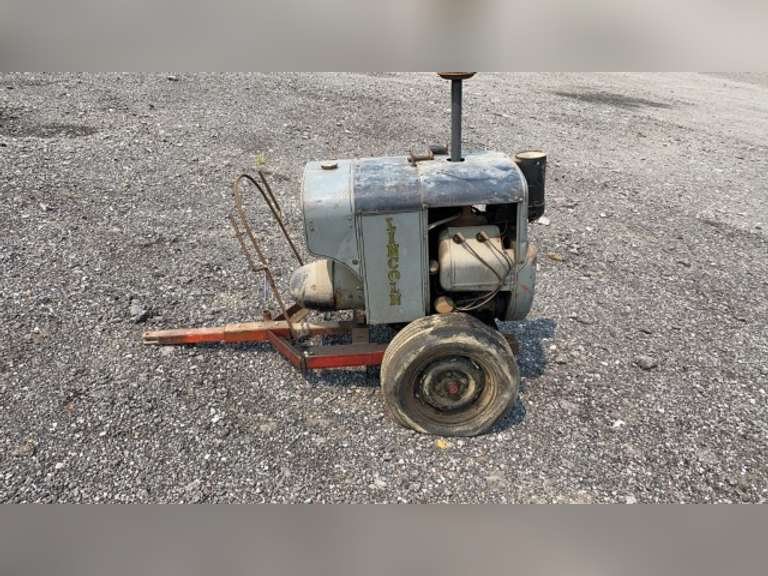
Choosing the right welder generator isn't just about picking a brand; it's about investing in a mobile powerhouse that fuels your craft, whether you're mending fences on a remote ranch or tackling heavy fabrication on a bustling job site. When it comes to reliability and performance, Lincoln Electric consistently stands out. This comprehensive Lincoln Welder Generator Buying Guide will cut through the noise, equipping you with the expertise to select the perfect Lincoln machine that meets your specific demands and keeps you productive, no matter where the work takes you.
At a Glance: Key Takeaways for Your Lincoln Welder Generator Search
- Fuel Type Matters: Gasoline for portability/lower upfront cost; Diesel for heavy-duty, efficiency, and longevity; LPG for clean burning in enclosed spaces.
- Output Isn't Just a Number: Match welding output (amps) and duty cycle to your specific processes (stick, TIG, MIG, gouging). Always check IEC ratings, not just model names.
- Auxiliary Power Trade-offs: Understand peak vs. continuous, single vs. three-phase. Remember, simultaneous welding and auxiliary power often means less available for each.
- Beyond the Basics: Look for reliable engines, robust warranties, and integrated functionalities like air compressors or battery jump-starts for added value.
- Don't Trust Model Names Alone: Always consult product specifications or owner’s manuals for true output, duty cycle, and other critical data to avoid missteps.
Why a Welder Generator? The Unsung Hero of Portable Power
Imagine being miles from the nearest power outlet, yet needing to weld a crucial structural beam or perform an urgent repair. That's precisely where a welder generator steps in. These robust machines provide a self-contained, portable power supply that's absolutely essential for high-demand welding when grid power is unavailable or unreliable.
Their primary advantage is simple: unwavering reliability and consistent power delivery right at your job site. This allows professionals, farmers, ranchers, and serious hobbyists to weld in remote areas, tackle emergency repairs, and maintain peak productivity without being tethered to a static power source. Moreover, a quality welder generator offers incredible versatility, effortlessly handling various welding types—from stick and TIG to MIG and even plasma cutting—without the compromises often associated with limited power. For a deeper dive into Lincoln's range of these indispensable machines, you can explore our All About Lincoln Welder Generators guide.
First Decision Point: Fueling Your Workhorse
The type of fuel your welder generator uses is arguably the most fundamental decision you'll make, impacting everything from upfront cost and operational expense to job site compatibility and longevity.
Gasoline: The Portable Powerhouse
Gasoline-powered welder generators are often the go-to for many users, particularly those needing portability and a lower initial investment.
- Key Characteristics:
- Size & Output: Generally smaller and lighter, with welding output typically capped at around 300 amps.
- Cost: Lower upfront purchase price compared to diesel models.
- Fuel Consumption: Tend to consume more fuel, leading to higher operating costs over time.
- Maintenance: Require more frequent service due to higher RPM engines.
- Job Site Restrictions: Their low flashpoint means they are prohibited on some industrial or hazardous jobsites due to safety regulations.
- Best For: Mobile welding crews, general contractors, farm/ranch work, and applications where portability and initial budget are paramount.
Diesel: The Indestructible Workhorse
When you need serious power, efficiency, and durability for demanding industrial applications, diesel is almost always the answer.
- Key Characteristics:
- Size & Output: Typically start at 300 amps and go upwards, offering significantly more welding and auxiliary output.
- Cost: Higher upfront investment, but this is often offset by long-term savings.
- Fuel Efficiency: Up to 35% more fuel-efficient than gasoline models, dramatically reducing running costs for heavy users.
- Longevity: Built to last, diesel engines have a much longer lifespan and greater durability under continuous heavy loads.
- Job Site Safety: Often required or preferred on large construction and industrial jobsites due to diesel's higher flashpoint, which is considered safer.
- Best For: Heavy-duty fabrication, pipeline work, structural steel, large construction projects, and any application demanding maximum power, efficiency, and continuous operation.
LPG (Liquid Propane Gas): The Clean-Burning Alternative
LPG models offer a compelling alternative, particularly when emissions are a concern.
- Key Characteristics:
- Performance: Similar to gasoline engines in terms of size and output.
- Clean Burning: Burn very clean fuel, producing fewer harmful emissions.
- Environmentally Friendly: Suitable for poorly ventilated environments or indoor use where gasoline and diesel emissions would be unacceptable or hazardous.
- Best For: Indoor welding applications, sensitive environments, and situations where environmental regulations or air quality are a primary concern.
Powering Your Process: Understanding Welding Output and Duty Cycle
Choosing a welder generator without understanding its true output and duty cycle is like buying a car without knowing its horsepower or fuel efficiency. These specifications are critical for ensuring your machine can handle the demands of your welding processes.
Matching Output to Your Welding Needs
Different welding processes and electrode sizes demand varying amperage. Here’s a quick guide:
- Stick Welding (SMAW): For electrodes up to 5/32 inches, you’ll generally need around 200 amps. Larger electrodes will require more.
- TIG Welding (GTAW) - Constant Current (CC): Typically requires 200-300 amps for most applications.
- Flux-Cored Arc Welding (FCAW) - Constant Voltage (CV): Generally demands 300 amps or larger machines for effective wire welding.
- Arc Gouging: A power-hungry process. A ¼-inch carbon rod needs 300 amps, while a 3/8-inch carbon rod will require closer to 450 amps.
The Crucial Role of Duty Cycle
Duty cycle is arguably the most important specification for understanding a welder generator's true output capability. It tells you how long a machine can run at a specific amperage and voltage within a 10-minute period before needing to cool down.
- IEC Standard: Always look for the IEC rating, which provides a standardized and reliable measure. For example, a "200A @ 60%" duty cycle means the machine can weld continuously at 200 amps for 6 minutes out of every 10-minute period.
- Higher Specs, More Output: Generally, higher voltage, higher duty cycles, and greater horsepower directly translate to more sustainable output from the machine.
- Avoid the Model Name Trap: This is a crucial pitfall! Never compare machines solely based on their model names (e.g., "Lincoln 225" doesn't necessarily mean it runs 225 amps continuously). ALWAYS consult the true output and IEC ratings found in the product specifications or owner’s manual. This detail can save you from an underperforming machine.
- Efficiency on Crowded Sites: Some machines offer single or dual output studs, which can increase efficiency and flexibility, especially on jobsites with multiple operators.
Beyond Welding: Auxiliary Power Output
A welder generator isn't just for welding; it's a mobile power plant. The auxiliary power output provides AC power for lights, pumps, power tools, grinders, or even emergency home appliances.
Peak vs. Continuous Power: Know the Difference
When evaluating auxiliary power, you'll encounter two key terms:
- Peak Power: This is the maximum power the generator can produce for a short burst, typically around 30 seconds. It's essential for starting inductive loads like compressors or pumps, which draw a high surge of power when they first kick on.
- Continuous Power: This is the power level the generator can sustain indefinitely (or at 100% duty cycle). This is your working power for tools and lights.
- Comparison Rule: Always compare peak-to-peak and continuous-to-continuous specifications. Comparing a machine's peak power to another's continuous power is misleading.
Single-Phase vs. Three-Phase: It's Not Interchangeable
These are fundamentally different types of electrical power.
- Single-Phase: The most common power found in homes and for handheld tools. Most standard receptacles (120-volt, 240-volt) provide single-phase power.
- Three-Phase: Often required by larger, more powerful equipment like industrial pumps, certain welders, or high-capacity plasma cutters. Three-phase power output will always be higher than single-phase from the same generator.
- Comparison Rule: Compare like-for-like. If your equipment requires three-phase, ensure your generator provides it.
The Power Trade-Off: Welding and Auxiliary Simultaneously
It's important to understand the inherent trade-off:
- Inverse Relationship: Increasing your weld output will decrease the available auxiliary power, and vice versa. There's a finite amount of power available from the engine, and it must be distributed.
- Dual Operator Capability: Some advanced machines can power a second operator by plugging in an inverter-style welder into their auxiliary output, effectively multiplying your on-site productivity. To learn more about how Lincoln designs these robust systems, check out All About Lincoln Welder Generators.
Essential Features: What Else Should You Look For?
A welder generator is a significant investment. Beyond its core power capabilities, several other features contribute to its overall value, durability, and user experience.
Reliable Engine: The Heart of the Machine
This cannot be overstated. The engine is the generator's heart, and its reliability directly translates to your ability to work. Lincoln Electric often partners with trusted engine manufacturers like Kohler and Kubota, known for their robust and long-lasting designs.
- Engine Manufacturer: Consider the brand's reputation, the local service network for maintenance and parts, and fleet commonality if you operate multiple machines.
Additional Functionality: More Than Just a Welder
Some modern welder generators go above and beyond, integrating other crucial job site tools.
- Integrated Air Compressors: Extremely useful for plasma cutters, air tools, and tire inflation.
- Hydraulic Pumps: For heavy equipment operation or specific industrial tasks.
- Battery Jump-Start Terminals: A lifesaver for dead batteries on vehicles or equipment.
- Benefits: These integrations save valuable space on your truck, reduce the need for separate machines, and often reduce reliance on your truck engine for power.
Available Receptacles: Powering All Your Tools
Ensure the generator has the outlets you need for all your peripheral equipment.
- Variety: Receptacles range from standard 120-volt, 20-amp outlets for smaller tools and lights to heavy-duty 240-volt or 50-amp outlets for larger power tools, plasma cutters, or even a smaller inverter welder.
Noise Level: An Often Overlooked Factor
Welder generators are inherently noisy due to their powerful engines. However, some models incorporate design features to minimize decibel levels, making the work environment more bearable. If you'll be working in residential areas or for extended periods, a quieter model can be a significant advantage. The Lincoln K3459-1, for instance, is noted for its quiet operation, a testament to thoughtful engineering in Lincoln's line of equipment. Our All About Lincoln Welder Generators guide offers more insights into specific models.
Dimensions and Weight: Portability and Footprint
These factors are critical for mobile applications and limited storage space.
- Range: Generators vary significantly. A high-output unit (e.g., 9,000+ watts) might weigh around 500 pounds, requiring a truck or trailer. Smaller models, like the Lincoln Tomahawk (around 200 pounds), are much more portable and manageable for a single person.
Warranty: Your Peace of Mind
A solid warranty protects your investment. Lincoln Electric typically offers warranties of 3 years or more on their welder generators, signaling confidence in their product quality and providing peace of mind.
Welding Accessories: Often Purchased Separately
While some generators might come with basic leads, high-quality welding accessories (electrode holders, ground clamps, welding cables) are often purchased separately. This allows you to customize your setup with the best tools for your specific needs.
Common Questions & Misconceptions Clarified
Can a welder generator be used as a home backup generator?
Yes, most welder generators with AC outlets can serve as a home backup. You can plug appliances directly into the generator's outlets. For connecting to your home's electrical circuits for whole-house power, you must use a professionally installed transfer switch to safely isolate your home from the grid.
Can multiple welding processes run simultaneously?
Typically, no. While a machine might be capable of multiple processes (stick, TIG, MIG), you usually need to adjust current settings for each process. You won't be running stick welding and MIG welding at the same exact moment on the same machine. However, some units can power a second inverter welder for simultaneous operator use (as discussed in auxiliary power).
What can a welder generator power?
It can power most welding tools (within its current output range) and virtually anything that runs on AC power, provided it has the necessary AC outlets and the appliance's power draw doesn't exceed the generator's continuous auxiliary power rating. This includes lights, small power tools (grinders, drills), air compressors (mind the surge current!), and most home appliances.
Pitfall: Don't buy based on product names alone!
This bears repeating: Many manufacturers use impressive-sounding names or numbers in their model designations that do not directly translate to continuous welding output or auxiliary power. Always, always, always refer to the detailed product specification sheets or owner's manuals for the true output, duty cycle, continuous auxiliary wattage, and other critical specifications. This is the single biggest mistake buyers make.
Spotlight: Notable Lincoln Welder Generator Models
Lincoln Electric offers a diverse range of welder generators, each tailored to specific user needs. Here are a few examples that highlight different features and applications:
- Lincoln Electric Eagle 10,000 Plus: Often an "Editor's Choice" for good reason, this versatile machine is a true all-rounder. It features a robust 23-horsepower Kohler engine, a generous 12-gallon fuel tank for extended run times, and a natural, intuitive user interface. With four 120-volt outlets and the capability to handle virtually any welding type, it's a powerhouse for serious professionals. Its backup recoil starter offers crucial peace of mind.
- Lincoln Electric Tomahawk: This model is a fantastic recommendation for hobbyists, farmers, or occasional welders. Its smaller size, impressive portability, and affordability make it an accessible entry point. Despite its compact nature, it remains compatible with stick, TIG, and MIG welding processes, proving that good things can indeed come in smaller packages.
- Lincoln K3459-1: This model stands out for its thoughtful design. It’s significantly quieter and boasts a smaller footprint, making it ideal for urban job sites or situations where noise and space are concerns. Being 25% lighter than many competitors, it enhances mobility. Coupled with a user-friendly digital interface, it represents Lincoln's commitment to operator convenience and efficiency. For more detailed specifications on these and other models, our central resource All About Lincoln Welder Generators provides comprehensive information.
Your Next Steps: Making the Confident Choice
Navigating the world of welder generators can feel complex, but with this Lincoln Welder Generator Buying Guide, you're now equipped with the knowledge to make an informed decision.
Before you make your final purchase, take these actionable steps:
- Define Your Needs Clearly: List the primary welding processes you'll perform, the largest electrodes/wires you'll use, and the types of auxiliary tools you'll need to power.
- Calculate Your Power Requirements: Based on your welding processes and tools, determine the minimum continuous welding output (amps and duty cycle) and continuous auxiliary power (watts) you truly need.
- Consider Your Environment: Will you be in remote areas (diesel's fuel efficiency shines), indoors (LPG is ideal), or need maximum portability (gasoline)?
- Visit a Local Dealer: Get hands-on with different models. Ask about service, parts availability, and warranty details. This is also a great opportunity to explore the specific Lincoln Electric offerings that might suit your requirements, and you can always revisit our general guide on All About Lincoln Welder Generators for reference.
- Always Double-Check Specs: Reiterate the mantra: never rely solely on model names. Verify all critical specifications (output, duty cycle, auxiliary power) in the product manual.
By taking these steps, you'll not only choose a Lincoln welder generator that fits your budget but one that will consistently perform, reliably power your projects, and stand the test of time, becoming an invaluable asset to your work.