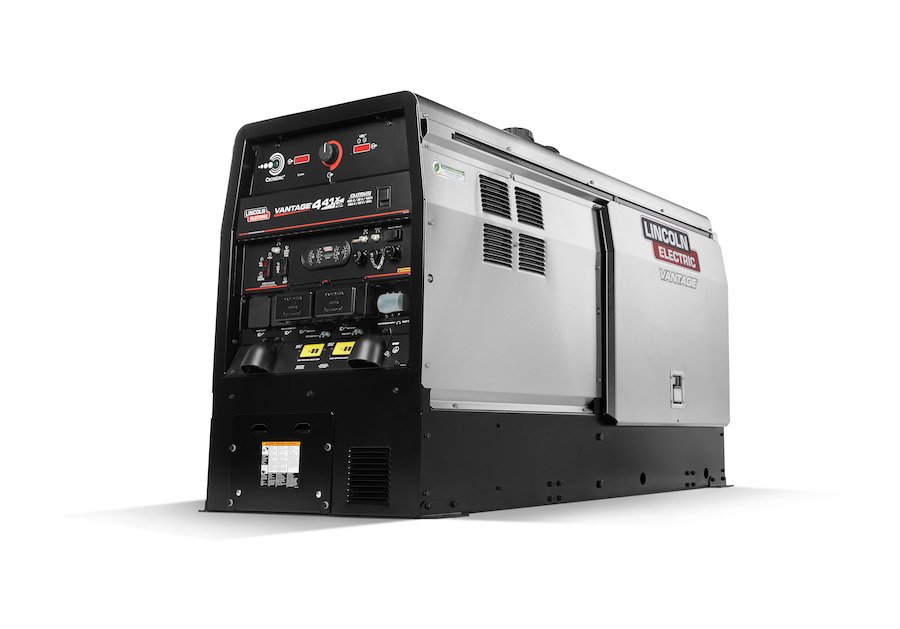
Choosing the right equipment for a job can make all the difference, especially when you're out in the field and relying on your tools. When it comes to power generation and welding on the go, a Lincoln welder generator is often at the top of many pros' lists. But with various options and features across the market, making informed Lincoln Welder Generator Model Comparisons isn't just smart—it's essential for getting the job done right, efficiently, and safely.
You're not just buying a machine; you're investing in reliability, performance, and the ability to tackle challenging situations far from any wall outlet. Whether you're mending fences on a sprawling ranch, working on a pipeline in a remote location, or a contractor needing versatile power at a dynamic job site, an engine-driven welder generator is your best friend. These robust units seamlessly integrate a power generator with a capable welder, often designed with separate outputs to ensure your welding arc stays stable even when you’re powering other tools simultaneously.
At a Glance: What You’ll Learn
- Why engine-driven matters: Get the lowdown on when a mobile powerhouse beats a plug-in.
- Key comparison factors: Understand critical specs like power, weight, engine, and duty cycle.
- Deep dive into models: See how the Lincoln Eagle 10.000 Plus stacks up against top competitors like Hobart, Klutch, Miller, ESAB, and Tomahawk.
- Unpack critical choices: Decide between an all-in-one combo or separate units, and what "clean power" really means for welding.
- Make your informed decision: A clear framework to match a welder generator to your specific needs.
Why an Engine-Driven Welder Generator is Your Field Operations MVP
Imagine this: You're miles from the nearest power grid, an urgent repair is needed, and without a reliable welding current and auxiliary power, your entire operation grinds to a halt. This is precisely where an engine-driven welder generator shines. These self-contained units are purpose-built for mobility and resilience, providing the crucial independence from utility power that fieldwork demands.
Unlike traditional plug-in welders tethered to an electrical outlet, engine-driven models run on gasoline or diesel, offering unparalleled freedom. They aren't just for welding; they double as robust power sources for grinders, lights, compressors, and other essential tools, making them the true workhorses of any mobile workshop. This dual functionality is incredibly valuable, simplifying logistics and reducing the amount of equipment you need to haul to a job site.
The Lincoln Legacy: A Reputation for Reliability
When you hear "Lincoln Electric," a few things probably come to mind: innovation, quality, and a long-standing tradition in welding. Lincoln welder generators carry this torch, designed to deliver consistent performance in demanding conditions. They're built for the long haul, often featuring robust engines and heavy-duty components that withstand the rigors of frequent transport and harsh environments. While the market offers several strong contenders, understanding the benchmarks set by Lincoln, like the Eagle 10.000 Plus, helps you appreciate what top-tier performance looks like and what features truly matter in the field.
Decoding the DNA of a Welder Generator: What Really Matters?
Before we dive into specific models, let's break down the core characteristics that define a welder generator's capability and suitability for your work. These are the aspects you'll want to scrutinize when making your own Lincoln Welder Generator Model Comparisons.
1. Power Output: Dual Threat of Welding Amps & Auxiliary Watts
This is arguably the most critical factor. You need to consider two distinct power outputs:
- Welding Amperage: How thick of material can the welder handle? Higher amps mean thicker welds. You'll often see a range (e.g., 60-170 A) and a maximum output at a certain duty cycle.
- Auxiliary Generator Wattage: How much power can it supply for tools, lights, or even an additional welder? This is usually expressed in continuous watts (what it can reliably sustain) and surge watts (a brief burst of higher power for starting motors). Look for adequate 120V and 240V receptacles to match your tools.
Why it matters: Skimping on wattage means you might struggle to run multiple tools or power heavier equipment. Insufficient welding amps limit your material thickness.
2. Engine Type & Fuel Efficiency: The Heart of the Machine
The engine dictates power, reliability, and how much fuel you'll burn.
- Horsepower (HP): Generally, higher HP means more power output for both welding and auxiliary functions.
- Fuel Type: Most portable units run on gasoline, but diesel options exist for heavier-duty, longer-run applications (though none in our immediate comparisons).
- Fuel Tank Capacity & Run Time: A larger tank translates to longer operation without refueling, crucial for all-day jobs. Fuel efficiency (gallons per hour at a given load) helps you predict this.
- Engine Brand: Kohler, Briggs & Stratton, and others are reputable engine manufacturers. Their quality often correlates with machine longevity.
Why it matters: A unit that constantly needs refueling interrupts work, while an inefficient engine eats into your operational budget.
3. Portability & Weight: Your Back Will Thank You
These machines are designed to be moved. Their weight and how they're designed for transport are key considerations.
- Total Weight: Lighter units are easier to maneuver and load. Heavier units often indicate more robust construction and larger engines/generators.
- Running Gear/Cart: Does it come with wheels, handles, or a "wheelbarrow" style cart? This significantly impacts ease of movement on rough terrain.
Why it matters: If you're frequently moving the unit solo or across uneven ground, weight and transport features are paramount.
4. Duty Cycle: How Long Can You Weld?
Duty cycle is a critical metric for welders, indicating how long a machine can weld continuously within a 10-minute period before needing to cool down. It's expressed as a percentage at a specific amperage. For example, "30% at 130 amps" means you can weld for 3 minutes out of every 10 minutes at 130 amps.
Why it matters: For occasional, short welds, a lower duty cycle is fine. For continuous fabrication or heavy repair work, you'll want a higher duty cycle to avoid frequent interruptions.
5. Welding Processes: More Than Just Stick
While most engine-driven units excel at Stick welding (SMAW), some offer capabilities for other processes.
- Stick (SMAW): The most common and versatile process for fieldwork, forgiving in windy conditions, and excellent for rusty or dirty metals. All units here have this.
- TIG (GTAW): Some units can power TIG welding, offering cleaner welds on thinner materials (requires additional equipment like a TIG torch).
- MIG (GMAW)/Flux-Cored: While not built-in, some higher-wattage generator sections can power a separate MIG or Flux-Cored feeder.
Why it matters: Your primary welding needs will dictate the required process capabilities. Don't pay for features you won't use, but don't limit yourself if you anticipate diverse tasks.
6. Maintenance & Durability: Built for the Grind
How often does it need service? How long is the warranty?
- Service Intervals: Extended oil change intervals (like Miller's 300 hours with synthetic oil) reduce downtime and cost.
- Warranty: A strong warranty on both the engine and welder provides peace of mind.
- Construction: Heavy-duty frames and protective enclosures contribute to a longer lifespan.
Why it matters: Downtime is lost money. Easy maintenance and robust build quality mean fewer headaches.
7. Cost vs. Value: The Budget Equation
Engine-driven welder generators represent a significant investment. Consider the upfront cost against the features, durability, and versatility it offers over its lifespan.
Why it matters: The cheapest option isn't always the most cost-effective in the long run if it constantly breaks down or lacks essential features.
Lincoln Welder Generator Model Comparisons: Pitting the Eagle 10.000 Plus Against the Field
Now, let's put these factors into practice by comparing the Lincoln Electric Eagle 10.000 Plus with a selection of popular and capable engine-driven welder generators from other manufacturers. This will give you a clear picture of the market and help identify what features align best with your specific demands.
1. Lincoln Electric Eagle 10.000 Plus
- Fuel: Gasoline
- Power Output: 9000 Watts continuous, 10,500 Watts surge (generator). Welding capabilities primarily Stick, but can power external MIG/TIG.
- Engine: Robust 23 HP Kohler Gasoline engine.
- Fuel Tank & Run Time: Large 12-gallon tank, consuming 1.5 gallons/hour at 210 amps DC, indicating long operational periods.
- Weight: Substantial 514 lbs (designed for stability and power, not ultra-portability).
- Auxiliary Outlets: High output: 38 amps from 120V/240V full-KVA receptacle; 40 amps from two 120V duplex receptacles.
- Maintenance: Standard 100-hour oil change, 200-hour filter.
The Edge: The Eagle 10.000 Plus is a powerhouse, offering top-tier auxiliary power output—one of the highest in this comparison—making it ideal for running multiple heavy-duty tools alongside welding operations. Its large fuel tank supports extended workdays, and the 23 HP Kohler engine speaks to serious reliability and capability. This machine is built for demanding contractor work where consistent, high-capacity power is non-negotiable.
2. Hobart Champion 145 Arc Welder/Generator Combo
- Fuel: Gasoline
- Power Output: 4,000 Watts continuous, 4,500 Watts surge (generator). 145 amps built-in stick welder.
- Engine: Briggs & Stratton 305 cc, 10 HP 4-cycle OHV.
- Fuel Tank & Run Time: 6.25 gallons, sufficient for a full day.
- Weight: Very compact 222 lbs.
- Auxiliary Outlets: One 20 Amp, 240V AC; four 20 Amp, 120V AC GFCI outlets.
- Welding Capacity: Welds up to 1/4″ thick metal, electrodes up to 3/32″.
- Duty Cycle: 30% at 130 amps. Includes running gear.
The Edge: The Hobart Champion 145 is a fantastic choice for those needing a highly portable, cost-effective solution for lighter-duty welding and general power. Its compact size and included running gear make it easy to move, while the respectable 145 amps can handle common repairs and fabrication tasks. It's a great entry-level or backup machine that won't break the bank or your back.
3. Klutch 7500K Arc Welder/Generator
- Fuel: Gasoline
- Power Output: 6,000 Watts continuous, 6,600 Watts surge (generator). 60–170 A built-in stick welder.
- Engine: 4-cycle, 14 HP Kohler engine.
- Fuel Tank & Run Time: 5 gallons, up to 8 hours run time with high fuel efficiency.
- Weight: 220 lbs (very light for its power).
- Auxiliary Outlets: Four 115V, 20 Amp; one 240V, 30 Amp twist lock receptacle.
- Welding Capacity: Welds up to 3/8in. thick steel, stainless steel, cast iron, hard surfacing, and aluminum.
- Warranty: 3-year on welder, 2-year on engine. Includes wheel barrel-style cart.
The Edge: The Klutch 7500K delivers a strong balance of power and portability at a budget-friendly price point. Its 14 HP Kohler engine and 6,000 continuous watts are impressive for a unit weighing only 220 lbs. The ability to weld up to 3/8-inch material broadens its utility significantly, making it an excellent value proposition for general fabrication and repair, especially with a solid warranty.
4. Miller Fusion 160 Engine-driven Welder Generator
- Fuel: Gasoline
- Power Output: 6200 W continuous, 6500 W surge (generator). 160-amp inverter stick welder.
- Engine: 13.4 HP Kohler, operates at 3,750 RPM or 2,500 RPM at idle.
- Fuel Tank & Run Time: 6.25 gallons. Approx. 7.5 hours (3,000 watts continuous load); 8.2 hours (welding at 160 amps, 20% duty cycle).
- Weight: 242 lbs.
- Maintenance: Kohler PRO 10W-50 full synthetic oil extends oil change interval from 100 to 300 hours.
- Special Feature: Power Shift technology allows running the 160-amp inverter stick welder off the generator or 120/240V utility power.
The Edge: The Miller Fusion 160 stands out for its advanced inverter technology, offering a smooth arc and the unique "Power Shift" feature for flexible power sources. Its extended oil change interval significantly reduces maintenance downtime and costs, a huge plus for busy professionals. It's a sophisticated, mid-range option combining generator power with precise welding control.
5. ESAB Ruffian 150 DC Manual Metal Arc Welder and AC Generator
- Fuel: Gasoline
- Power Output: 4,000 watts continuous, 4,500 watts peak (generator). 150A at 60% duty cycle built-in stick welder.
- Engine: 14-HP KOHLER® Command PRO.
- Fuel Tank & Run Time: 5 gallons, 6.5 hours run time at maximum output.
- Weight: 236 lbs.
- Auxiliary Outlets: Four 120V; one 240V. Auxiliary generator output voltage is independent of welding current.
- Welding Capacity: Supports electrodes up to 5/32-in. diameter (e.g., 7018, 6010, 6011), with adjustable arc force and easy start.
The Edge: The ESAB Ruffian 150 shines with its exceptional welding performance, thanks to the independent auxiliary power output that ensures the arc remains unaffected by tool usage. The high duty cycle (60% at 150A) is a major advantage for extended welding tasks, and features like adjustable arc force enhance weld quality and ease of use. This is a welders' welder, prioritizing arc quality and sustained output.
6. TOMAHAWK 15 HP Engine Driven Portable Welder – Generator
- Fuel: Gasoline
- Power Output: 2000 W continuous (lowest generator capability on list). 210 A welding output (highest welding performance on list).
- Engine: 15 HP Tomahawk power inverter.
- Fuel Tank & Run Time: 7 gallons, for full-day operation.
- Weight: 202 lbs (lightest on list).
- Auxiliary Outlets: Two 120V receptacles, no 240V.
- Welding Capacity: Stick and TIG welder (comes with stick electrode holder and TIG welding torch for out-of-the-box TIG welding).
- Duty Cycle: 60%.
The Edge: The TOMAHAWK is a specialist. While its auxiliary power generation is significantly lower than others, its welding output is the highest here at 210 amps with a 60% duty cycle, and it offers out-of-the-box TIG capability. Its extremely light weight makes it the most portable for welding-focused jobs where high auxiliary power isn't the primary need. If your main goal is powerful, mobile welding (including TIG), and minimal auxiliary power, this could be your pick.
Engine-Driven Welder vs. Plug-In Welder: A Fundamental Choice
The first fork in the road is deciding whether you truly need the portability and independence of an engine-driven unit, or if a plug-in welder makes more sense for your work. This is a foundational decision that impacts cost, versatility, and capability.
- Versatility is King (Engine-Driven): For fieldwork, remote repairs, pipeline projects, or any job where grid power is unreliable or non-existent, an engine-driven welder is non-negotiable. It's your mobile power station, powering everything from your welding arc to your angle grinder and work lights. If fieldwork makes up more than 70% of your tasks, an engine-driven unit is the way to go.
- Powerhouse Performance (Plug-In): Plug-in welders generally offer higher amperage capabilities (often 500+ amps for industrial models compared to ~225 amps for most engine-driven units) and frequently boast 100% duty cycles, especially for hobbyist inverter models. For projects demanding high power for very thick materials, or for dedicated shop fabrication where a power source is always available, a plug-in welder can be superior in raw welding performance and sustained output. They can also be multi-process (MIG, Flux-cored, TIG, Stick, cutting) in a single compact unit.
- Consistent Arc (Modern Engine-Driven): Older engine-driven welders might have seen their welding arc performance degrade when auxiliary tools drew power. However, modern machines like the ESAB Ruffian feature separate, independent auxiliary power outputs, ensuring your welding current remains smooth and unaffected—a huge improvement for consistent arc quality.
- Cost Considerations: Engine-driven welders have a higher initial price tag due to their integrated engine and generator components. However, their unparalleled versatility for contractors working in diverse locations can quickly justify the investment. For purely indoor, shop, or garage welding, a plug-in unit is almost always more cost-effective.
Welder Generator Combo vs. Regular Generator: Getting Clean Power
It might seem tempting to just buy a powerful standalone generator and a separate plug-in welder. However, there's a crucial distinction that often gets overlooked: the quality of the power.
- Welder Generator Combos (The Integrated Advantage): These machines are engineered specifically for welding. They provide what's often referred to as "clean" power—stable voltage and frequency—which is essential for a smooth, consistent welding arc. The internal components are designed to handle the dynamic loads of welding without causing arc instability. Plus, combining both functions into one unit saves space and reduces the amount of gear you need to transport. The trade-off is often that their total auxiliary power output might be lower than a large standalone generator, as a significant portion of the engine's capacity is dedicated to the built-in welder.
- Regular Generators (Not Always Welder-Friendly): While a high-wattage regular generator (>10 kW) might theoretically be able to power a plug-in welder, their output isn't always "clean" enough for consistent welding. Fluctuations in voltage or frequency (known as "dirty power") can lead to erratic arc performance, poor weld quality, and even damage to sensitive inverter welders. Unless you have a specific "welding generator" designed for standalone use, a regular generator is generally a less ideal primary choice for dedicated welding tasks. They are great for powering tools, lights, and appliances, but for welding, the dedicated combo unit usually wins for arc quality.
Making Your Choice: A Decision Framework for Your Needs
With all this information, how do you zero in on the perfect unit for you? Use this framework to guide your decision-making process. Think of it as refining Your Lincoln welder generator guide by asking yourself the right questions.
- What's Your Primary Use Case?
- Heavy-duty fieldwork/contracting (like pipeline, structural repairs): You need high auxiliary power, strong welding amps, and a large fuel tank. The Lincoln Electric Eagle 10.000 Plus with its robust generator output is a strong contender here. Consider the ESAB Ruffian or Miller Fusion for their advanced welding performance.
- General fabrication/repairs (mobile workshop, farm use): A balance of power and portability is key. The Klutch 7500K offers great value, or the Miller Fusion 160 if arc quality and extended maintenance intervals are priorities.
- Light-duty welding/occasional repairs (DIY, small projects): Portability and budget are prime. The Hobart Champion 145 is a solid, compact choice.
- Specialized high-amp welding (with TIG option) where auxiliary power is secondary: The TOMAHAWK 15 HP excels here with its high welding output and TIG capability, despite lower generator watts.
- How Much Power (Welding & Auxiliary) Do You Really Need?
- List the tools you'll run simultaneously. Add up their wattage.
- What's the thickest material you'll routinely weld? This dictates amperage.
- Remember, it's better to have a little more than a little less.
- How Often Will You Move It? And How?
- If you're loading it into a truck by yourself, weight is critical. Look for units under 250 lbs with good running gear.
- If it's mostly stationary or moved by a team/forklift, a heavier, more powerful unit might be fine.
- What's Your Budget?
- Don't just look at the upfront cost. Factor in fuel efficiency, maintenance intervals, and potential downtime. A more expensive unit with lower operating costs and higher reliability might save you money in the long run.
- Are There Any Special Features You Value?
- Extended oil change intervals (Miller Fusion).
- Independent auxiliary power (ESAB Ruffian).
- Specific welding processes (TOMAHAWK for TIG).
- Dual power input (Miller Fusion's Power Shift).
Common Myths & Misconceptions About Welder Generators
Let's clear up some common misunderstandings that can trip up even experienced buyers.
- Myth 1: "More Watts means better welding."
- Reality: Not directly. More auxiliary watts mean you can run more tools, but welding quality comes from dedicated welding circuitry, arc characteristics, and duty cycle. A machine like the TOMAHAWK has low generator watts but very high welding amps.
- Myth 2: "Any generator can power a welder."
- Reality: As discussed, regular generators often produce "dirty power" that can make welding difficult or damage inverter welders. Always use a dedicated welder generator combo for optimal arc performance.
- Myth 3: "Weight equals durability."
- Reality: While heavy machines often use robust components, modern technology allows lighter inverter-based welders (like the Miller Fusion or ESAB Ruffian) to be incredibly durable and performant. Judge by construction, engine quality, and warranty, not just raw weight.
- Myth 4: "Duty cycle only matters for production work."
- Reality: Even for occasional repairs, a low duty cycle can be frustrating. Constantly waiting for your machine to cool down slows you down. A higher duty cycle ensures your machine can keep up when you need to lay down several consecutive beads.
- Myth 5: "Gasoline engines are all the same."
- Reality: Engine brand (Kohler, Briggs & Stratton, etc.), horsepower, and specific design features (like OHV) significantly impact reliability, fuel efficiency, and lifespan. A premium engine is a worthwhile investment.
Getting the Most Out of Your Welder Generator: Maintenance and Best Practices
Once you've made your selection, proper care ensures your investment pays dividends for years to come.
- Read the Manual: This sounds basic, but every machine has specific maintenance requirements, especially regarding its engine.
- Regular Oil Changes: Adhere to the manufacturer's recommended intervals (e.g., 100 hours, or 300 with specific synthetic oils). Engine oil is the lifeblood of your generator.
- Filter Checks: Air filters and fuel filters need regular inspection and replacement to ensure efficient operation and prevent damage.
- Fuel Storage: Use fresh fuel and, if storing the unit for extended periods, add a fuel stabilizer or drain the tank to prevent fuel system issues.
- Keep it Clean: Dust, dirt, and welding spatter can accumulate and lead to overheating or component failure. Keep the cooling fins and exterior clean.
- Check Connections: Regularly inspect welding cables and auxiliary power cords for damage, ensuring safe and efficient power transfer.
By following these simple steps, you'll significantly extend the life and reliability of your welder generator, whether it's a venerable Lincoln Eagle or any of the other high-performing models we've discussed.
Your Path Forward: Powering Up Your Fieldwork
Navigating the landscape of welder generators, particularly when making specific Lincoln Welder Generator Model Comparisons against other top brands, can seem complex. But by focusing on your actual needs—the type of work you do, the power requirements of your tools, your budget, and how often you'll be on the move—you can cut through the noise.
Lincoln Electric, with models like the Eagle 10.000 Plus, sets a high bar for power and reliability, often being the go-to for serious contractors and demanding fieldwork. However, the market offers fantastic alternatives and specialized units that might better fit specific niches, from the highly portable Hobart Champion to the high-duty-cycle ESAB Ruffian or the TIG-capable TOMAHAWK.
Take the time to assess your operational demands. Visualize your typical job site. What tools do you need? How much welding will you do? Once you have a clear picture, revisit these comparisons, and you'll find the perfect engine-driven companion ready to tackle any challenge, anywhere.